Guatemalan coffees are prized for their distinctive moderate acidic and fruity flavours. Depending on the growing region, they also tend to be very sweet. Undertones of chocolate and caramel add to the sweetness of this region’s coffees.
Introduction to Guatemalan Coffee
Guatemala is famous for its coffee production. It’s one of Central America’s highest coffee producing countries. Most of Guatemala’s trade is dependent on agriculture. The main focus is coffee, sugar and bananas. But agriculture in Guatemala is not easy. Small, family owned farms are competing with larger, factory farms. This adds pressure to lower their prices, which decreases profits for struggling farmers.
At A Glance:
Roast Profile: Medium to Dark.
Primary Flavors: Milk Chocolate, Toasted Nut, Green Apple.
In 2026, where your coffee comes from is as important as how it tastes. We only buy ethically sourced coffee. We work with partners like the ASOBAGRI cooperative. This ensures a fair price for every family farm.
ASOBAGRI
ASOBAGRI is the short form of Asociación Barillense de Agricultores. They are a collective with over 1,900 members. Their aim is to increase the power of small, family owned farms. ASOBAGRI works hard to connect small farms to coffee buyers. The main focus is to reduce poverty through economic growth and social programs.
They have a wide variety of programs to help local growers, including the following:
1. Youth Programs
ASOBAGRI works with young adults to keep them in the coffee industry. Many young people are reluctant to take over their family farms. Coffee farmers have experienced struggles for generations. The Los Jovenes lot of coffee from ASOBAGRI supports this particular cause.
Our current crop of Guatemalan coffee is part of the Los Jovenes program. Profits from the sale of the Los Jovenes coffee go to job training and new technologies. The youth in this program want to maintain their indigenous culture and language. Keeping jobs in the region allows these young people to stay connected to their heritage.
2. Scholarships for Farmers
The Asociación Barillense de Agricultores connects coffee growers with scholarship programs. This gives farms the tools they need to advance their growing practices. They aim to lead in more sustainable farming practices and reduce food insecurity.
3. Supporting Local Women in Coffee
Only 41% of Guatemalan women are in the paid labour force. Many women, particularly in rural areas, take on work in the home. The ASOBAGRI works to put women into job training and in key positions in their organization. They will even pay a premium for coffee grown on a farm with women in a leadership position.
Growing practices for large coffee farms tend to have a negative impact on many birds. 75% of coffee farms leave no place for migratory birds. Even worse, sometimes farmers will clear cut entire habitats to plant coffee crops.
Scientists at the Smithsonian developed a Bird Friendly Certification. It ensures that birds in the area have a place to live alongside coffee growers. Bird Friendly coffee farms need to have good foliage cover, height, and biodiversity. This must support quality habitat for birds and other wildlife. So far, the ASOBAGRI has 392 certified bird friendly growers in Guatemala. They produced over 1.7 million pounds of bird friendly coffee to date.
Flavor Profile of Guatemalan Coffee
Guatemalan beans have a smooth, earthy base. The roast level changes the flavor of the resulting beverage coffee:
Light Roast: Green apple, tamarind, and floral notes.
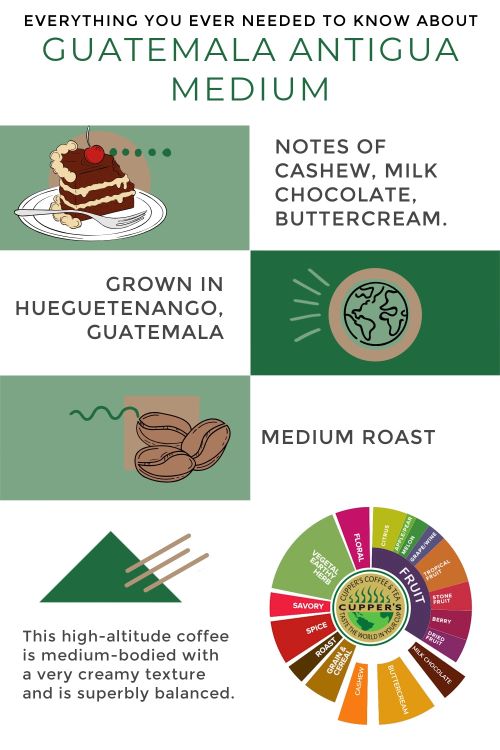
Medium Roast: Milk chocolate, buttercream, and roasted cashew.
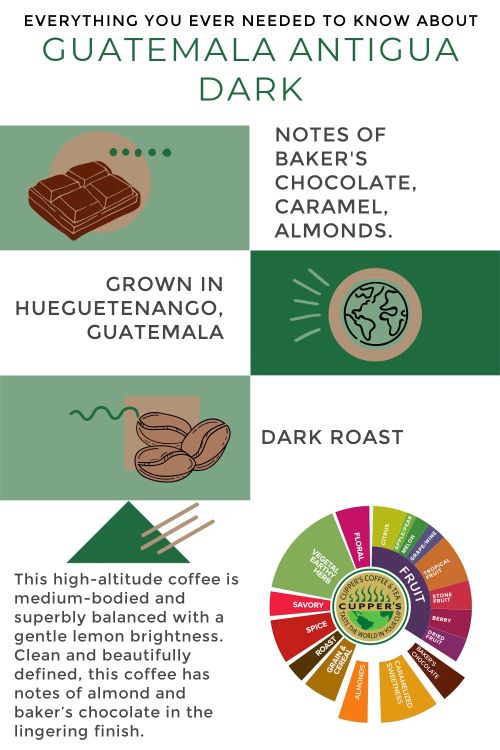
Dark Roast: Baker’s chocolate, almond, and clean citrus.
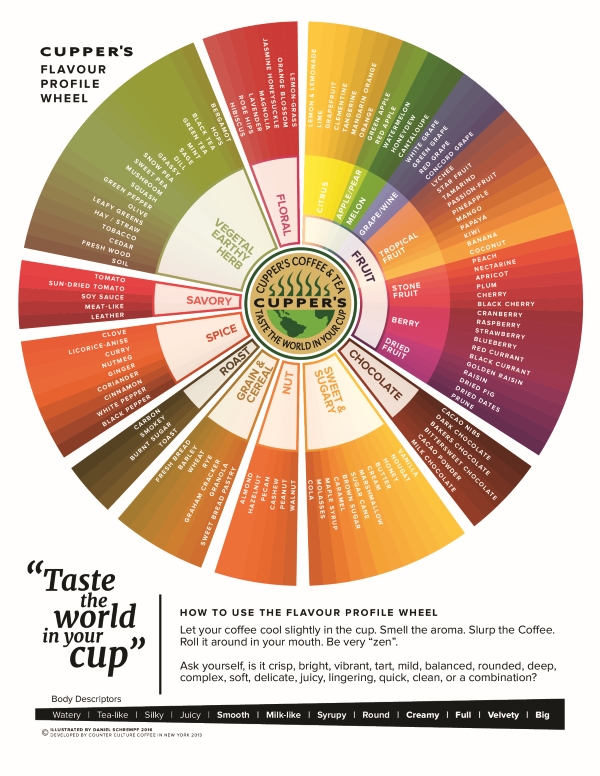
Do you want to describe coffee like a pro? Our Flavour Wheel helps you name the tastes you love. It breaks down complex notes like citrus, spice, and sugar. Use the wheel while you sip your Guatemalan coffee. It will help you find the subtle hints of apple or chocolate in every cup. Read Cupping Coffee: The Ultimate Tasting Guide to start your sensory journey.
Popular Varieties of Guatemalan Coffee
Guatemalan coffee has six main Arabica coffee varietals. They are: Typica, Caturra, Bourbon, Catuai, Pache, and Maragogipe. Each type has unique characteristics and susceptibility to diseases.
Typicahs has intense flavor and acidity. It is a classic choice, even though the harvest is small.
Caturra produces high-quality beans and large harvests. It can struggle with leaf rust.
Bourbon, with excellent cup quality, has tall stature but low production.
Catuai, though susceptible to rust, produces high-quality beans with high yield potential.
Pache is compact with medium yield potential but vulnerable to diseases.
Maragogipe has large beans, and offers good to very good cup quality.
At Cupper’s we source Caturra and Bourbon beans for our Guatemala Antigua beans.
Brewing Guatemalan Coffee
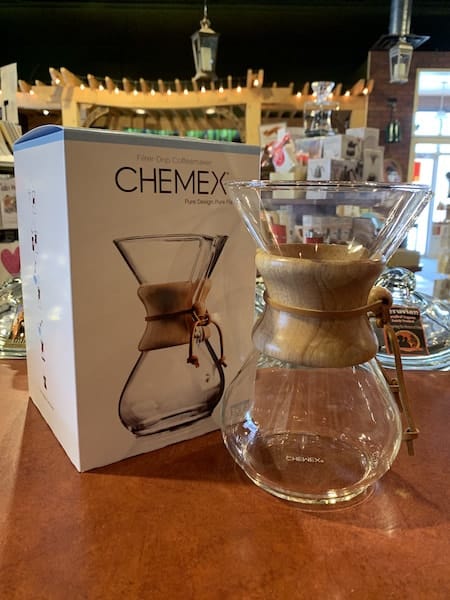
We can’t get enough of the Guatemalan coffee brewed in a Chemex. This specialty pour over has a slower pull through, resulting in the most extraction. If you like the bold flavour of a French press but the clarity of a paper filter brew, this pour over is for you. Pair your Chemex with Bodum’s Electric Gooseneck Kettle for best results.
Pro-Tip: Use a medium-coarse grind for your Chemex. This keeps the brew from stalling. It also keeps the fruity acidity bright. Need a better grinder? See our Top Burr Coffee Grinders of 2026 for our favorite gear.
Guatemalan coffee is a mainstay at Cupper’s. These beans are very flexible in that they taste amazing at any roast level. We have several degrees of roasts that our customers love and enjoy. The final results keep our customers happy, caffeinated, and coming back for more!
Coffee roasting is an ever-changing art and science. To learn more about our roaster and how we roast coffee, read our post The Ultimate Guide to Coffee Roasting.
Guatemala Antigua Medium Roast
Our first roast of Guatemala coffee is our Guatemala Antigua Medium Roast. This high-altitude coffee is also medium-bodied. It features a very creamy texture and is superb balance. Find delicate magnolia and lots of chocolate in the aroma. In the flavour notes, cashew nuttiness comes forward early and strong. That taste complements the follow-up flavours of milk chocolate and buttercream.
Guatemala Antigua Dark Roast
Our second roast of Guatemala coffee is our Guatemala Antigua Dark Roast. This high-altitude coffee is medium-bodied with superb balance. With a gentle lemon brightness, it’s clean with beautiful definition. As a dark roast coffee you taste notes of almond and baker’s chocolate in the lingering finish.
Xtreme Bean
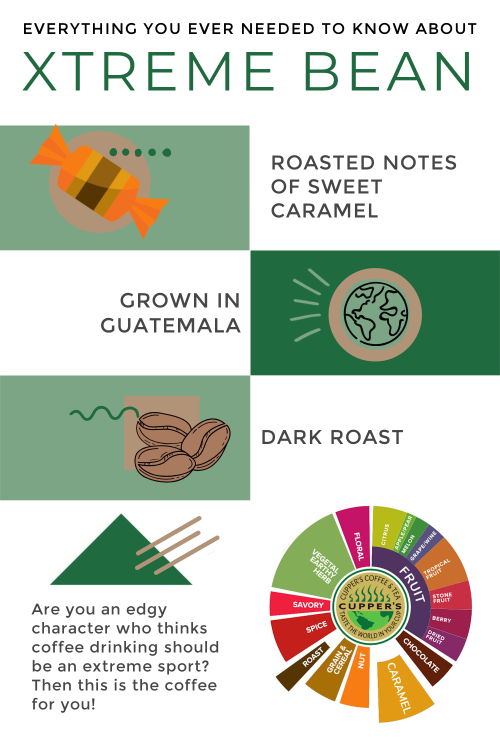
Xtreme Bean is one that we’ve taken right to the edge of an unconventional dark roast. It’s extreme in its flavour and body, no exaggeration. Xtreme Bean is predictably full, surprisingly sweet, and caramel-like. It offers an intense flavour with remarkably little sharpness… it’s very smooth. This is the most popular dark roast that we offer.
Cupper's Blends with Guatemalan Coffee
The nuttiness of Guatemala Coffee makes it an excellent choice for amazing blends. Guatemala coffee makes up the bones of many of our favourite blends including:
No matter what Cupper’s coffee you try, you’re bound to find a coffee blend you’ll love that has Guatemalan coffee beans in it!
Frequently Asked Questions
What does Guatemala coffee taste like?
It is famous for balance. Most people notice a milk chocolate taste. It has a clean, apple-like acidity. You may also taste nuts, caramel, or honey.
Is Guatemala coffee high in acid?
It has a crisp and clean finish, not sour. For a sensitive stomach, choose a dark roast. You can also try the Cold Brew method to lower acid levels.
How should I grind these beans?
Use a medium-coarse grind for a Chemex or drip machine. Use a coarse grind for a French Press. Always grind right before you brew for the best flavor. Check out our Definitive Guide To Coffee Grinders for more information.
Is Cupper’s coffee ethically sourced?
Yes. Every bag we sell is ethically sourced. We work with our brokers and farmers to ensure fair pay. We also work with resources to support local community programs.
Shopping Cart
Local Delivery Schedule
Thank you for your order and request for delivery. Deliveries are completed the same day,
Monday through Friday (excluding stat holidays) if received by 1:00 pm that day.
Any received after that time will be delivered the next business day.